

Your starting point
Choose your edition and goal first: occasional enchanting or regular XP collection. Compare building and travel costs before looking at output figures.
In this guide
See it in the game
Visual references from their creators. Follow the original build and check its corrections before building.
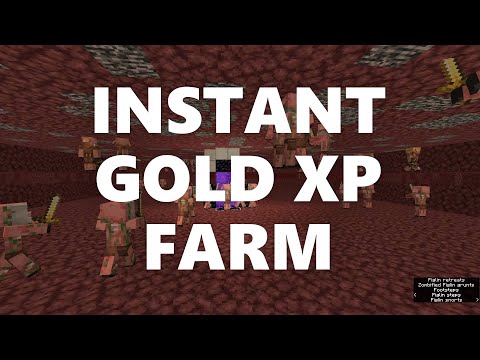
Instant Gold XP Farm
Tutorial by ianxofour · English
Java-only example. The author reports testing from 1.16 and lists 1.21+ corrections. This is not a Bedrock tutorial.
Watch original on YouTube ↗Reference review: October 5, 2026. Designs have not been tested in-game by MapMySeed. A creator’s stated version does not confirm compatibility with later releases.
Compare access and use before choosing
Difficulty depends on the exact build and resources you already have. This comparison assigns no XP rates and does not treat a tutorial as validated for both editions.
| Option | Edition | Requirements | Difficulty to compare | Use |
|---|---|---|---|---|
| A mob spawner you found | A Java- or Bedrock-specific design | An already located spawner | Excavation, transport and collection in that design | A project with a known location |
| Endermen | A Java- or Bedrock-specific design | Access to the End | Building and travel in the End | Visits along an End route |
| Gold and XP from the cited video | Java; do not transplant to Bedrock | Tutorial materials and access between dimensions | Portals, heights and creator corrections | Gold and XP; the example is not an AFK farm |
Decide what you need experience for
Enchanting tables consume experience and lapis lazuli. If you only use one occasionally, record how long it currently takes to obtain what you need. That gives you a baseline for deciding whether a larger build is worthwhile.
Three options to investigate
If you have already found a mob spawner, look at a tutorial using that location: you have a specific site to plan around. If you already visit the End, compare an enderman farm against the cost of travelling there. For combined gold and XP in Java, the linked video provides an example.
These are candidates to compare, not a speed ranking. Check the edition, version notes and whether a build needs access to places you have not reached yet.
Choose around what you have already unlocked
Early game: if you are still collecting iron, food and equipment, include those resources in the budget before choosing a large build. A spawner you have already found provides a specific project to investigate; searching for one from scratch adds a cost that the tutorial’s materials list does not show.
Later game: if you regularly travel to the End or Nether, compare candidates along that route. Include somewhere to leave equipment, protected access and the return journey. The same farm may be convenient for someone living beside its portal and awkward for another player on the server.
In multiplayer, also decide who will use it and whether players need to take turns. Check server restrictions before investing: edition, server software, modifications and rules about automation are part of the decision, not details to resolve afterwards.
Example: measure the whole visit
Imagine two fictional options that complete the same enchanting goal. The first needs four minutes of use and twelve minutes of return travel. The second needs eight minutes of use and two minutes of travel. The complete visits take sixteen and ten minutes: the second gets you back to your project sooner despite its slower collection stage.
Include the initial effort too. If an upgrade takes three hours to build and saves five minutes per visit, recovering that time takes 36 visits. This is an illustrative calculation, not a measurement of any farm. Building for enjoyment has value too; the calculation helps when saving time is your main objective.
Make a useful comparison
Write a short checklist for each candidate and rule out those that do not fit your world.
- Exact tutorial edition and version.
- Materials already available and those still needed.
- Build time plus travel from your base.
- Actions needed to collect XP and manage items.
- Server conditions and maintenance access.
Evaluate the gold and XP example
ianxofour provides later corrections and a dedicated multiplayer chapter. His description flags adjustments on Paper/Spigot servers and clarifies that the design is not intended as an AFK farm. Read those notes before copying it.
Treat it as a Java example, not a Bedrock recommendation. The figures in its title are not results measured by this website.
Source: ianxofour — Instant Gold XP Farm, corrections and multiplayer notes
Before starting the Java gold example
Split the project into spawning, the connection between dimensions and the operating point. Save coordinates and a picture of each completed area. When a mob appears somewhere unexpected, these records help you return to the relevant tutorial stage without rebuilding the whole route.
ianxofour’s description corrects the Overworld bridge portal height to Y=191 or higher and warns against entering the spawning portal during the indicated construction stage. Read those notes alongside the recording: a written correction can be newer than the footage.
Before carrying valuable materials, prepare the return route and a safe place to leave supplies. Complete a working trial before adding an exterior or connecting other systems. For Bedrock, keep this planning method but choose a tutorial for that edition: the circuit linked here remains a Java example.
Source: ianxofour — Instant Gold XP Farm, corrections and multiplayer notes
Check that the player receives the experience
Measure a repeatable goal, such as preparing the same enchantment from an equivalent starting state. Record your starting level and progress bar, travel time, operating time and result. Comparing only the final levels of players who started differently cannot evaluate the farms.
Separate mobs, items and experience. Enemies reaching the chamber show that transport works; items reaching storage show that collection moves those items. Neither observation alone establishes that the player receives the intended XP. Test from the specified operating position and perform the action the design requires.
- Check mob arrival before changing storage.
- Observe one batch being processed and experience reaching the player.
- Repeat from the same starting state and record interruptions or position changes.
- Describe the failing stage: no mobs arrive, mobs become stuck, or experience does not reach you.
Where the seed map helps
Use the map to inspect structures and biomes available in its layers. This website does not locate dungeon spawners or identify the best position for an XP farm.
Choose a design you can check, keep its source, and test its operation before decorating or building large storage systems.
Sources and review
Written by MapMySeed. Tutorials and their designs belong to the creators credited above.